
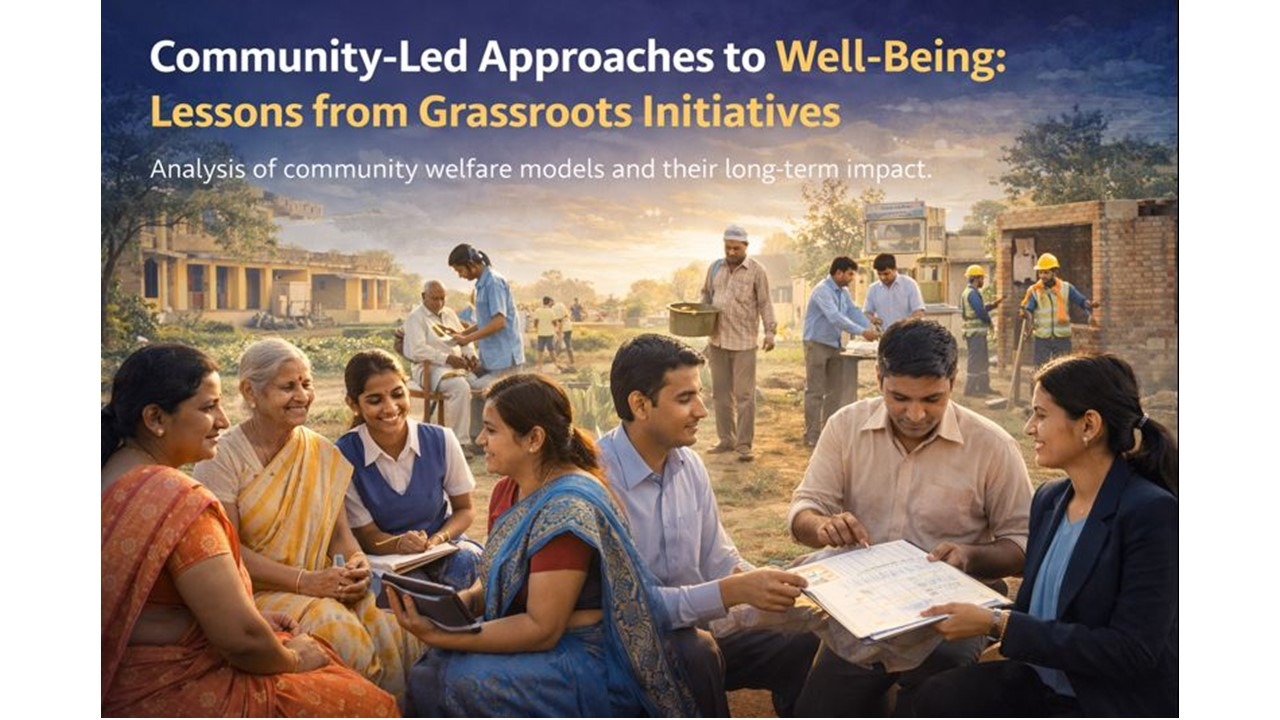
Community well-being is most sustainable when the people it seeks to serve are active participants rather than passive beneficiaries. Across diverse social and geographic contexts, grassroots initiatives have demonstrated that community-led approaches can deliver lasting improvements in health, education, livelihoods, and social cohesion. These models offer valuable lessons on how locally driven welfare strategies create long-term impact by building ownership, resilience, and trust.
At the heart of community-led well-being is the principle of participation. Grassroots initiatives begin with an understanding of local realities—social structures, cultural practices, and lived challenges. By involving community members in identifying priorities and designing interventions, these initiatives ensure that solutions are relevant and responsive. This participatory approach reduces dependency on external support and fosters a sense of collective responsibility for outcomes.
One of the most significant strengths of community-led welfare models is their ability to address multiple dimensions of well-being simultaneously. Health, education, livelihood, and social inclusion are deeply interconnected. Grassroots programmes often adopt an integrated approach, combining awareness campaigns, skill development, access to basic services, and peer support networks. Such holistic models recognize that sustainable well-being cannot be achieved through isolated interventions.
Women and youth frequently play a central role in driving community-led change. Self-help groups, youth collectives, and local volunteers act as catalysts for social transformation by mobilizing resources, sharing knowledge, and supporting vulnerable populations. Empowering these groups strengthens social capital and creates leadership pipelines within the community. Over time, this local leadership becomes a critical asset for sustaining welfare initiatives beyond project cycles.
Another key lesson from grassroots initiatives is the importance of trust and social cohesion. Community-based programmes are often more effective because they are built on existing relationships and local credibility. When services are delivered by trusted community members, participation increases and resistance to change decreases. This is particularly important in areas where institutional mistrust or social marginalization has limited the reach of formal welfare systems.
Grassroots initiatives also demonstrate adaptability and innovation. Local actors are often quicker to respond to emerging needs, whether during economic disruptions, public health crises, or environmental challenges. Their proximity to the community allows for continuous feedback and course correction. This flexibility enhances the long-term relevance and effectiveness of welfare interventions, ensuring that they evolve alongside community needs.
From a long-term impact perspective, community-led models contribute significantly to capacity building. Beyond immediate outcomes, they strengthen local skills, governance structures, and problem-solving capabilities. Communities become better equipped to advocate for their rights, engage with public institutions, and attract partnerships. This shift from dependency to self-reliance is a critical indicator of sustainable well-being.
However, community-led approaches are not without challenges. Limited resources, volunteer fatigue, and uneven leadership capacity can affect scalability and consistency. These challenges highlight the need for supportive ecosystems that include training, funding, and institutional collaboration. Governments, civil society organizations, and corporate partners can play an enabling role by respecting community autonomy while providing technical and financial support.
In conclusion, grassroots initiatives offer powerful insights into building sustainable community well-being. By centring participation, fostering local leadership, and addressing well-being holistically, community-led approaches create enduring impact. For policymakers and development practitioners, the lesson is clear: lasting welfare outcomes are most achievable when communities are not just recipients of change, but architects of their own progress.