The future of work is being reshaped by rapid technological advancement, shifting economic structures, and evolving employer expectations. While new opportunities are emerging across sectors, a persistent skills gap continues to challenge both employers and job seekers. At the heart of this disconnect lies a misalignment between education systems, labour market needs, and individual career choices. Effective career guidance has the potential to bridge this gap and play a decisive role in building a future-ready workforce.
The skills gap is not merely a shortage of technical expertise; it is a broader mismatch between what individuals learn and what the market demands. Many learners complete formal education without adequate exposure to real-world applications, emerging industries, or evolving job roles. As a result, employers struggle to find job-ready talent, while educated youth face underemployment or unemployment. Career guidance, when introduced early and sustained across life stages, can address this imbalance by helping individuals make informed, realistic, and adaptable career decisions.
One of the key functions of career guidance is improving awareness. Learners often base career choices on limited information, social expectations, or outdated perceptions of success. Structured guidance provides exposure to a wide range of career pathways, including vocational roles, emerging digital professions, and entrepreneurship. By presenting accurate labour market information and future skill trends, career guidance empowers individuals to align their aspirations with opportunity-rich sectors.
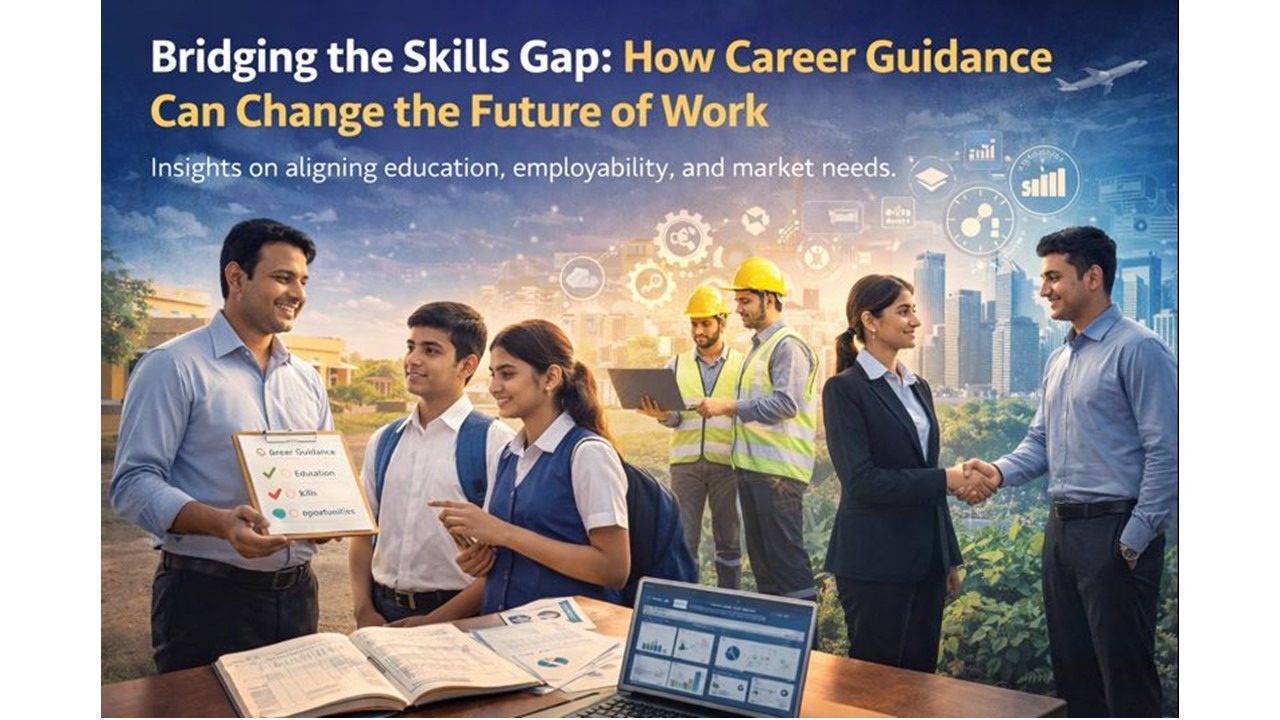
Career guidance also plays a critical role in linking education with employability. Guidance programmes that integrate skill mapping, aptitude assessment, and experiential learning help learners understand their strengths and development needs. Internships, apprenticeships, industry interactions, and project-based learning allow individuals to connect theory with practice. Such exposure not only enhances employability but also builds confidence, adaptability, and problem-solving capabilities—qualities increasingly valued in modern workplaces.
In the context of a rapidly changing job market, career guidance must extend beyond initial job placement. Lifelong career support is essential as automation, artificial intelligence, and globalisation redefine job roles. Continuous guidance enables workers to anticipate change, pursue reskilling or upskilling, and navigate career transitions effectively. This approach reduces the risk of workforce displacement and supports inclusive economic growth by ensuring that no segment of the population is left behind.
Employers and industry stakeholders also have a vital role to play in strengthening career guidance ecosystems. Collaboration between educational institutions, industry bodies, and community organisations ensures that guidance programmes remain relevant and grounded in market realities. Employer participation through mentorship, curriculum inputs, and skill forecasting helps create a feedback loop between education providers and the labour market.
Equally important is the need to make career guidance accessible and inclusive. Women, rural youth, first-generation learners, and marginalized communities often lack access to reliable guidance and professional networks. Inclusive career guidance models—delivered through schools, community centres, digital platforms, and civil society initiatives—can help democratize access to information and opportunity. When guidance is culturally sensitive and locally relevant, it becomes a powerful tool for social mobility.
Bridging the skills gap is not a one-time intervention but a systemic challenge that requires coordinated action. Career guidance stands at the intersection of education, employability, and market needs, offering a practical pathway to align all three. By investing in structured, inclusive, and future-oriented career guidance, societies can equip individuals to navigate uncertainty, employers to build resilient workforces, and economies to thrive in an ever-evolving world.