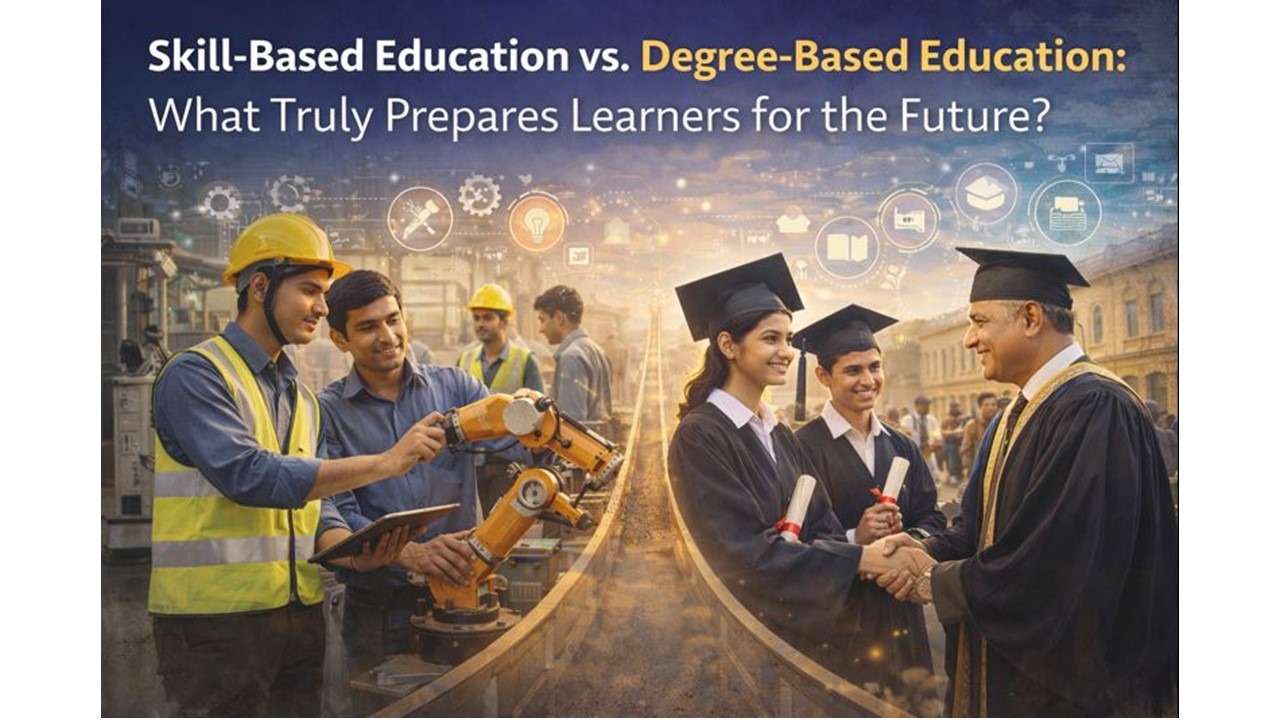
As the world of work undergoes rapid transformation, the long-standing dominance of degree-based education is being increasingly questioned. Employers today operate in an environment shaped by technological change, global competition, and evolving business models. In this context, a critical debate has emerged: does a formal degree still represent the best preparation for the future, or do skill-based education models offer a more relevant pathway for learners?
Degree-based education has traditionally been valued for its structured learning, academic depth, and social recognition. Universities and colleges provide learners with theoretical foundations, analytical thinking, and exposure to diverse disciplines. For many professions—such as medicine, law, and research—formal degrees remain essential. Degree programs also play an important role in personal development, fostering critical thinking, communication skills, and a broad intellectual outlook.
However, degree-based education often struggles to keep pace with the speed of change in the labour market. Curricula may take years to update, while industries evolve much faster. As a result, graduates can find themselves equipped with credentials but lacking practical, job-ready skills. This disconnect has contributed to rising underemployment, where qualified individuals are unable to secure roles aligned with their education.
Skill-based education, in contrast, focuses on acquiring specific competencies that are directly applicable to the workplace. These programs emphasize practical learning, hands-on experience, and measurable outcomes. Vocational training, apprenticeships, short-term certifications, and modular courses allow learners to develop skills aligned with current market needs. Skill-based pathways are often more flexible and accessible, enabling learners to enter or re-enter the workforce more quickly.
One of the key strengths of skill-based education is its responsiveness. Training programs can be adapted rapidly to reflect emerging technologies and industry requirements. This makes them particularly effective in sectors such as information technology, digital services, healthcare support, and skilled trades. For learners from underserved backgrounds, skill-based education can provide a faster and more affordable route to employability and income generation.
Yet, skill-based education is not without limitations. Narrowly focused training may lack the broader perspective required for long-term career growth. As industries evolve, specific technical skills can become obsolete, making continuous learning essential. Without strong foundational knowledge and transferable skills, learners may face challenges in adapting to new roles or advancing into leadership positions.
The question, therefore, is not which model is superior, but how the two can be integrated. The future of education lies in hybrid approaches that combine the strengths of both systems. Degree programs can incorporate skill-based modules, internships, and industry projects to enhance employability. Similarly, skill-based pathways can embed core academic competencies such as communication, critical thinking, and digital literacy to support adaptability and lifelong learning.
Employers, educational institutions, and policymakers all have a role to play in reshaping this balance. Recognition of prior learning, flexible credentialing systems, and partnerships between academia and industry can create multiple, interconnected learning pathways. Such models allow learners to move seamlessly between education and work throughout their lives.
Ultimately, what truly prepares learners for the future is not a degree or a skill in isolation, but the ability to learn, adapt, and grow. Education systems that value both depth of knowledge and practical competence will be best positioned to equip individuals for a future defined by change. By moving beyond rigid distinctions, societies can create inclusive learning ecosystems that serve diverse aspirations and evolving workforce needs.