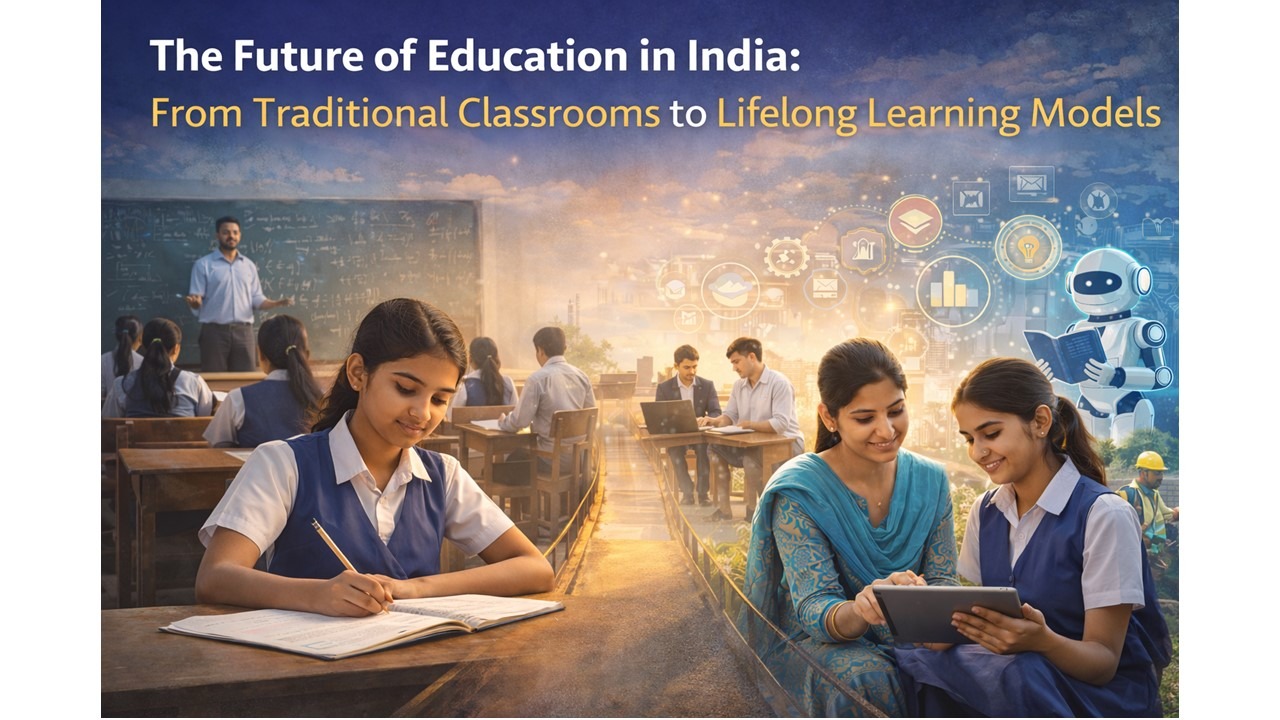
India stands at a pivotal moment in its educational journey. With one of the world’s youngest populations and a rapidly evolving economy, the country’s education system must move beyond traditional classroom-based models to embrace lifelong learning as a national priority. The future of education in India will be defined not only by access and enrolment, but by relevance, adaptability, and inclusion across all stages of life.
For decades, formal education in India has followed a linear path: school, higher education, and entry into the workforce. While this model has enabled mass literacy and academic advancement, it has struggled to keep pace with changing skill requirements and diverse learner needs. A single qualification can no longer guarantee lifelong employability in an economy shaped by automation, digital transformation, and global competition. This reality calls for a fundamental shift in how learning is designed, delivered, and recognized.
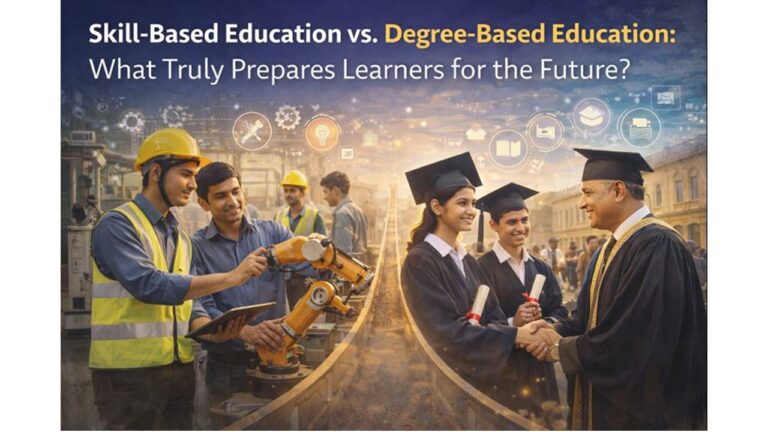
One of the most visible trends shaping the future of education is the growing emphasis on skills and competencies alongside academic knowledge. Employers increasingly value problem-solving, communication, adaptability, and digital literacy. As a result, education systems are beginning to integrate vocational training, experiential learning, and interdisciplinary approaches into mainstream curricula. This shift helps learners connect theory with practice and prepares them for real-world challenges from an early stage.
Technology is another powerful driver of change. Digital learning platforms, online courses, and blended learning models are expanding access to education across geographic and socio-economic boundaries. In India, technology has the potential to reach rural learners, working professionals, and adult learners who may not be able to participate in traditional classroom settings. However, the success of digital education depends on addressing issues of digital access, language diversity, and learner support to ensure that technology becomes an enabler rather than a divider.
The concept of lifelong learning lies at the heart of this transformation. Lifelong learning recognizes that education is a continuous process, extending beyond formal schooling into adulthood and later life. It creates opportunities for reskilling, upskilling, and personal development at different life stages. For India’s workforce, lifelong learning is essential to remain relevant in a changing job market. For individuals, it offers pathways to career mobility, economic security, and personal fulfillment.
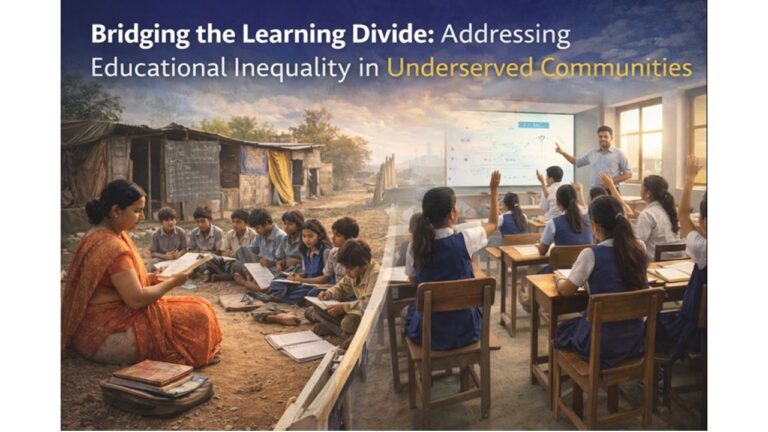
Community-based learning models and informal education also play a critical role in the future education ecosystem. Learning that is rooted in local contexts—through community centres, civil society initiatives, and peer learning networks—can address specific social and economic needs. These models are particularly effective in engaging women, youth, and marginalized groups, for whom conventional education pathways may be less accessible.
Educators and institutions must evolve alongside learners. Teachers are no longer mere transmitters of information; they are facilitators, mentors, and lifelong learners themselves. Continuous professional development, exposure to new pedagogies, and the integration of inclusive teaching practices are essential to support this shift. Institutions, too, must adopt flexible structures that recognize prior learning and offer modular, stackable credentials.
The future of education in India depends on collaboration across sectors. Policymakers, educational institutions, industry, and civil society must work together to create coherent learning pathways and supportive policy frameworks. When education is aligned with social and economic realities, it becomes a powerful tool for national development.
In moving from traditional classrooms to lifelong learning models, India has the opportunity to build an education system that is inclusive, resilient, and future-ready. Such a system will not only prepare individuals for work, but empower them to learn, adapt, and thrive throughout their lives.